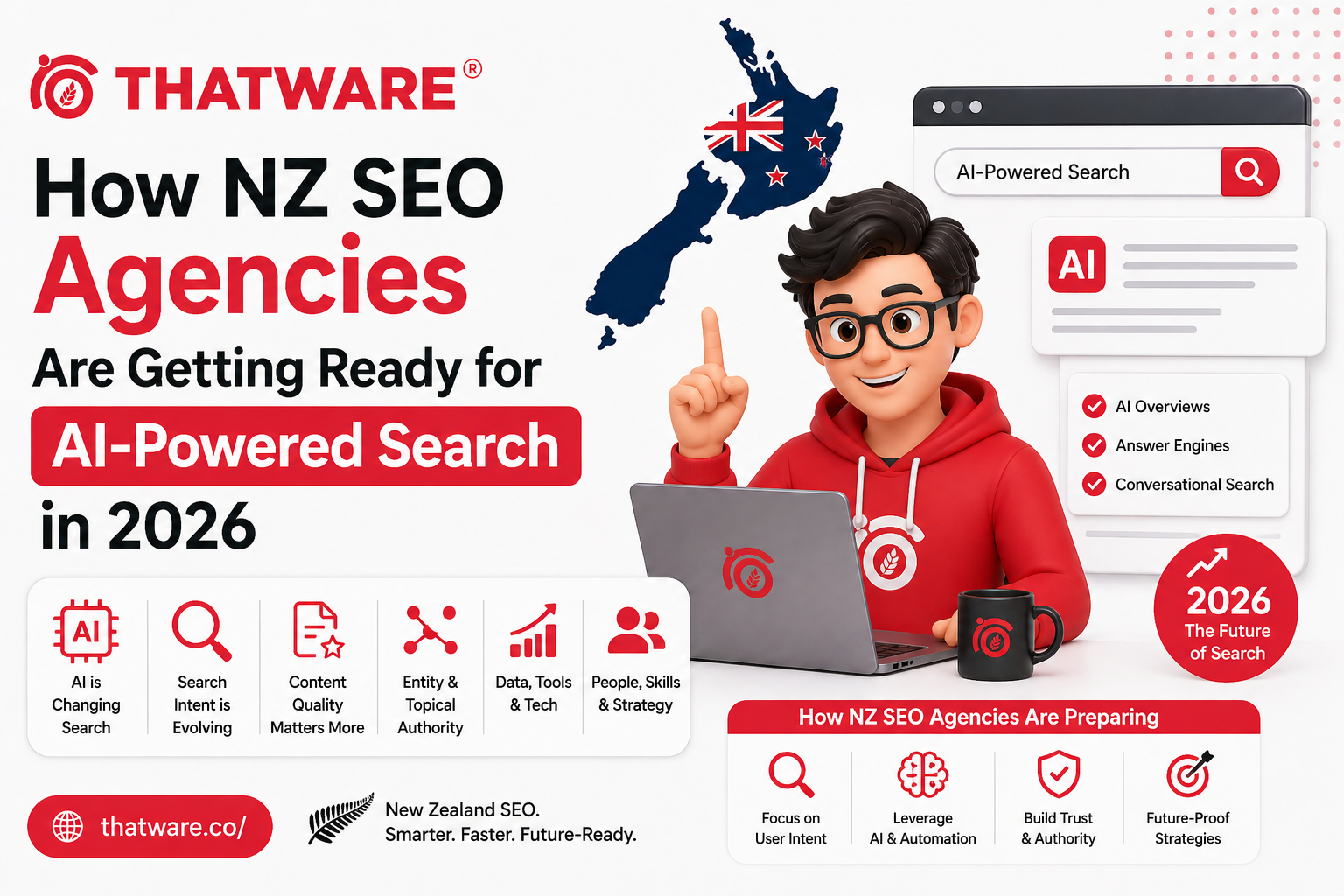
The conversation about AI’s impact on search has been going on long enough that it’s easy to become numb to it — another prediction, another think piece, another “the future of SEO is…” headline that doesn’t quite match what’s actually happening in practice. But in New Zealand’s digital marketing community, the conversation has shifted from speculation to preparation. The agencies that will still be relevant in two or three years are actively rebuilding how they think about content, authority, and visibility. The right seo agency new zealand in 2026 isn’t just the one doing traditional SEO competently. It’s the one that has a coherent answer to how they’re preparing clients for AI-influenced search environments. The best seo agency new zealand conversations happening right now are less about keyword rankings and more about how to make a brand the authoritative answer to the questions its customers are asking.
Here’s what that preparation actually looks like.
What AI-Powered Search Means for New Zealand Brands
New Zealand presents an interesting case study in AI search impact. The market is small enough that competitive dynamics move quickly — a few brands establishing strong AI search visibility in a category can shift market share meaningfully without the diffusion effects that cushion competitive changes in larger markets. And the relative sophistication of NZ digital consumers means adoption of AI search tools like Perplexity and Google’s AI Overviews has been reasonably strong.
The practical implication for NZ brands: if your content isn’t being cited in AI-generated responses for queries your customers are asking, and your competitors’ content is, you’re losing visibility in a channel that’s growing faster than any other format in search right now.
The good news is that most NZ businesses haven’t yet made serious investments in AI search optimization. The window for early advantage is genuinely open.
What the Agencies Preparing Well Are Doing
The NZ agencies taking this seriously are focused on a few specific capabilities that distinguish AI-ready SEO from conventional approaches.
Entity optimization is one of the foundations. Language models build their understanding of brands and businesses from structured and unstructured signals across the web — Wikipedia entries, consistent business information across directories, structured data on websites, brand mentions in credible publications, and the coherent identity built up over time across multiple sources. Agencies preparing for AI search are auditing and improving entity consistency for their clients as a systematic priority.
Content architecture is the other major shift. The traditional SEO content architecture — keyword research, topic clustering, on-page optimization — still matters, but it’s being supplemented by question-oriented content development. What specific questions are your target customers asking? Which of those questions don’t currently have great answers on your site? Building content that directly and authoritatively answers those questions — with real depth, genuine expertise, and clear sourcing — is the preparation for AI search visibility.
The agencies doing this well aren’t abandoning traditional best seo agency new zealand. They’re layering AI-specific optimization on top of it.
The Content Credibility Challenge
One of the harder things about preparing for AI search is that language models have reputations for being cited. Brands that are already recognized as authoritative sources — that have been around for a while, that have accumulated credible mentions across the web, that have demonstrated expertise over time — have an advantage in AI-generated responses.
New brands and less-established players face a credibility gap that takes time to close. The agencies helping NZ clients navigate this are focused on accelerating credibility signals: earning placements in New Zealand’s credible media landscape (NZ Herald, RNZ, Newsroom, industry publications), building author profiles that demonstrate genuine expertise, producing original research and data that earns citations, and ensuring that wherever the brand appears online it’s represented consistently and credibly.
This is fundamentally a trust-building program, not just a content production program. The distinction matters.
Local Search and AI in the NZ Context
For NZ businesses with physical locations or service areas, AI search introduces a new dimension to local visibility. When someone asks Google AI Overview or Perplexity “where’s a good plumber in Wellington” or “what are the best cafes near Ponsonby,” the response draws on signals about local business quality, authority, and relevance that overlap with but don’t fully duplicate traditional local SEO factors.
The NZ agencies building comprehensive local AI search preparation are combining traditional GMB optimization with the content authority and entity optimization work described above. The brands that win local AI search citations tend to be those with strong GMB profiles, credible review ecosystems, local press coverage, and content that demonstrates genuine local expertise — not just location pages with keyword-stuffed descriptions.
Measurement and Expectation Setting
One of the harder conversations in AI search preparation is around measurement. Traditional SEO has established measurement frameworks — rankings, traffic, conversions. AI search visibility is harder to measure systematically, especially in a market the size of New Zealand where data volume is lower and tools built for US and UK market scale don’t always produce reliable signals.
The agencies being honest with clients are setting expectations about this measurement challenge while still defining proxy metrics that provide useful directional signal: brand mention monitoring in AI-generated responses, Share of Voice analysis in relevant query categories, and tracking whether organic traffic from question-oriented content is growing as a proportion of total organic.
Perfect measurement will lag behind adoption of the channel by a year or more. That’s uncomfortable for clients who need to justify investment. The right response is to be honest about the uncertainty while making the case for early preparation based on the trajectory of the channel.
The NZ agencies getting this right aren’t waiting for perfect measurement tools. They’re building the foundations now.